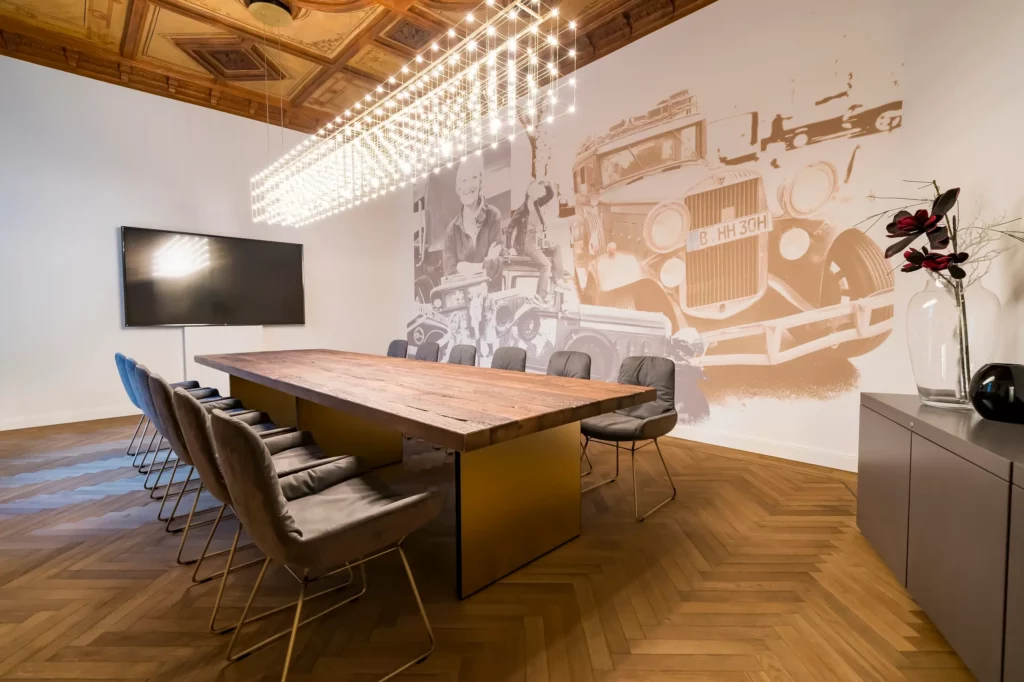
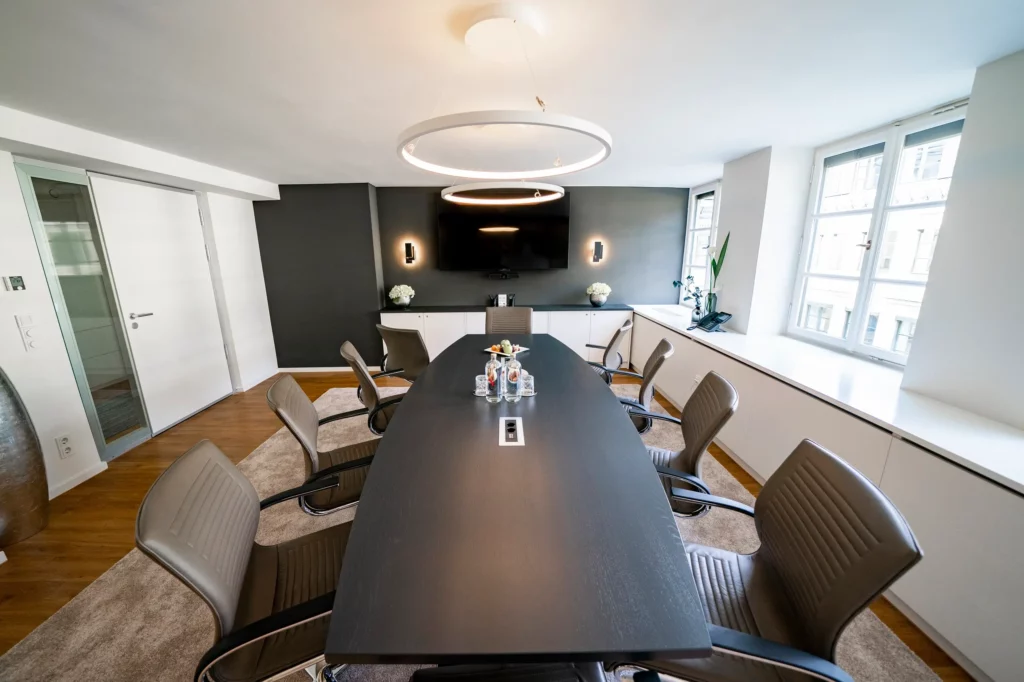
Coworking or Serviced Office: Which Solution Is a Better Fit for Your Business?


It’s easy to find a workspace. The more important question is: What kind of environment suits your work style, your public image, and your customers’ expectations?
Coworking spaces and serviced offices both offer flexible alternatives to traditional leased office space. The difference lies not only in the amount of space, but also in the nature of the work environment: open or private, collaborative or discreet, spontaneous or structured.
Wer gelegentlich einen professionellen Arbeitsplatz in zentraler Lage sucht, findet im Coworking eine flexible Lösung. Wer ein eigenes Büro mit Service, repräsentativer Adresse und professioneller Infrastruktur benötigt, sollte sich mit dem Thema Büro mieten beschäftigen.
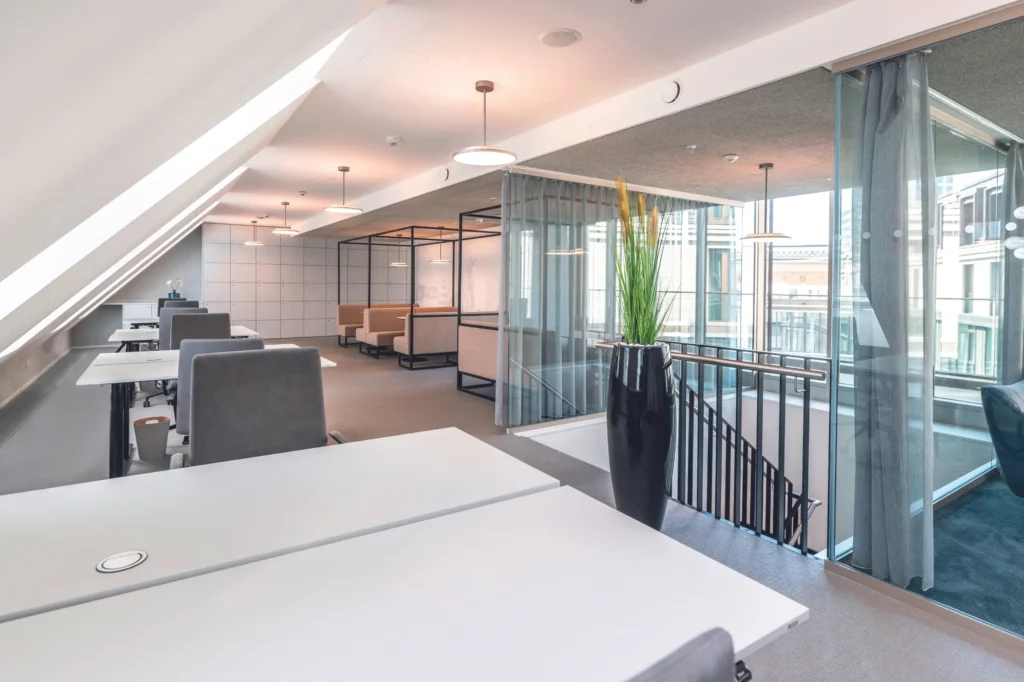
Table of contents
- What is coworking?
- Coworking isn’t new—it’s just that the term is more recent
- What is a serviced office?
- Coworking vs. Serviced Office: The Key Differences
- Who is coworking suitable for?
- Who is a serviced office best suited for?
- Quiet as a Location Advantage: pureSilent® at Satellite Office
- The Underestimated Question: How Does Your Office Come Across to Others?
- Costs: Which is cheaper?
- Coworking, Serviced Office, or Virtual Office?
- Decision-Making Guide: What’s Right for You?
- Conclusion: Flexibility is valuable only if it aligns with expectations.
What is coworking?
Coworking means you use a workspace in a shared environment. This could be a spot in a lounge, a flexible desk, or a workspace in an open area. The idea behind it is simple: you work professionally without having to rent your own office on a long-term basis.
Coworking is particularly well-suited for people and teams who work remotely, need a workspace only occasionally, or are specifically looking for an open environment. Coworking can also be a good option for business travelers, self-employed individuals, project work, or individual workdays between appointments.
Typical features of coworking include:
- flexible use
- low barrier to entry
- central location
- shared workspaces
- Access to Infrastructure
- occasional interaction with other users
Coworking works best when openness, flexibility, and easy access are the top priorities. It is less ideal when confidential conversations, focused work over several hours, or a professional setting for client visits are required.
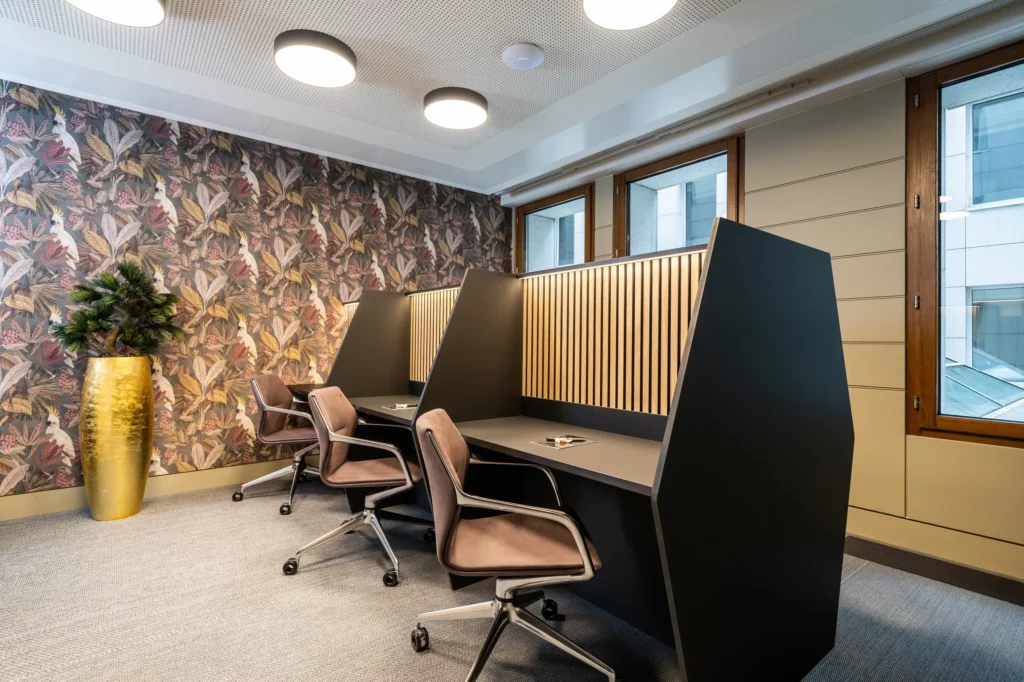
Coworking isn’t new—it’s just that the term is more recent
What is now collectively referred to as coworking, serviced offices, or flexible workspaces has been a part of Satellite Office’s mission since 1997. At that time, the term “coworking” had not yet entered common parlance. However, the idea behind it was already clear: companies, self-employed individuals, and decision-makers should be able to use professional workspaces flexibly without being tied to a traditional office with a long-term lease, its own administrative burden, and high fixed costs.
Satellite Office is thus one of the early European providers of flexible business infrastructure. The difference from many of today’s coworking concepts lies in its mission: The focus has never been solely on the individual workspace, but rather on a professional environment offering services, prestigious addresses, high-quality amenities, and the quiet necessary for focused work.
This is precisely where the distinction between coworking and serviced offices begins. Coworking offers flexible access to workspaces. A serviced office goes a step further: it provides a dedicated, private office complete with infrastructure, services, and a professional image.
Alternatively, here is a shorter version for the first part:
Satellite Office has been dedicated to flexible work environments since long before the term “coworking” was widely used in Europe. Since 1997, we have been developing workspaces for people who want to remain flexible but do not want to compromise on professionalism, service, a quiet environment, and prestigious addresses. This experience also defines the difference between traditional coworking and a serviced office: it’s not just about a workspace, but about an environment that fits your own way of working and the image you project to the outside world.
What is a serviced office?
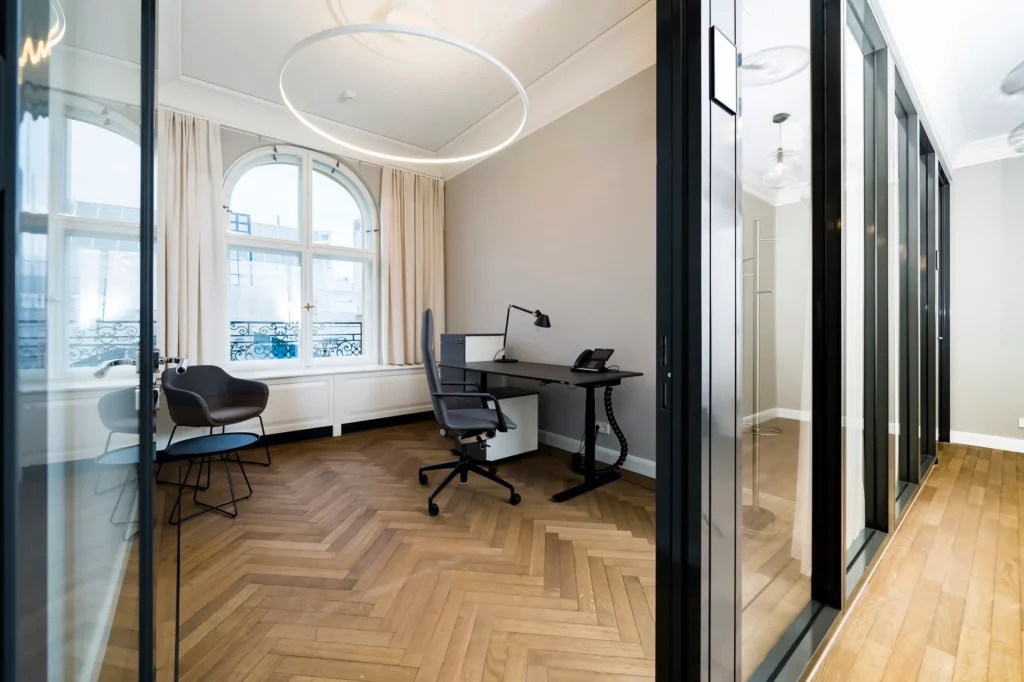
A serviced office is a private, ready-to-use office with professional infrastructure. It is furnished, offers flexible leasing options, and includes services that would otherwise take up a lot of time in a traditional office setting: reception, mail service, telephone service, conference rooms, technical equipment, and a prestigious business address.
Unlike a traditional rental office, you don’t have to worry about renovations, furnishings, internet, reception services, or day-to-day office management. You just move in and start working.
A serviced office is particularly well-suited for companies that want flexibility but don’t want to compromise on privacy, quiet, service, and a professional image.
Typical features of a serviced office include:
- own private office
- flexible terms
- high-quality furnishings
- professional business address
- Reception and Office Services
- Conference rooms available for booking
- scalable office sizes
- prestigious setting
For consulting firms, law firms, agencies, financial service providers, project teams, international companies, and growing businesses in particular, a serviced office is often a better solution than an open coworking space.
For more information, please visit our page on renting office space at Satellite Office. If, on the other hand, you don’t need a permanent space but would like to work flexibly, coworking at Satellite Office is the better solution for you.
Coworking vs. Serviced Office: The Key Differences
| Criterion | Coworking Space | Serviced Office |
|---|---|---|
| Work Environment | open, collaborative, flexible | personal, structured, professional |
| Privacy | limited | high |
| Peace | depending on capacity and the concept | much easier to plan |
| Confidentiality | limited suitability | very well suited |
| Client Appointments | Possible, but it depends on the environment | prestigious setting |
| Cost Structure | low entry costs | Higher, but with more power and exclusivity |
| Contractual Obligation | very flexible | flexible, usually with a greater degree of commitment |
| Teamwork | rather informal | ideal for established teams |
| Public Image | depending on the provider | Professional and high-quality |
| Service | usually reduced or standardized | Comprehensive office and reception services |
| Suitable for | Freelancers, remote work, individual workdays | Companies, consultants, law firms, project teams |
Who is coworking suitable for?
Coworking is a good fit if you don’t need a permanent office setup and want to remain flexible. It’s a great solution for individual workdays, remote work, or situations where a professional workspace is sufficient.
Coworking is especially well-suited if you:
- need a job only occasionally
- want to work productively between appointments
- don’t need their own office space
- deliberately seek out an open work environment
- would like to work flexibly at various locations
- want to avoid administrative office issues
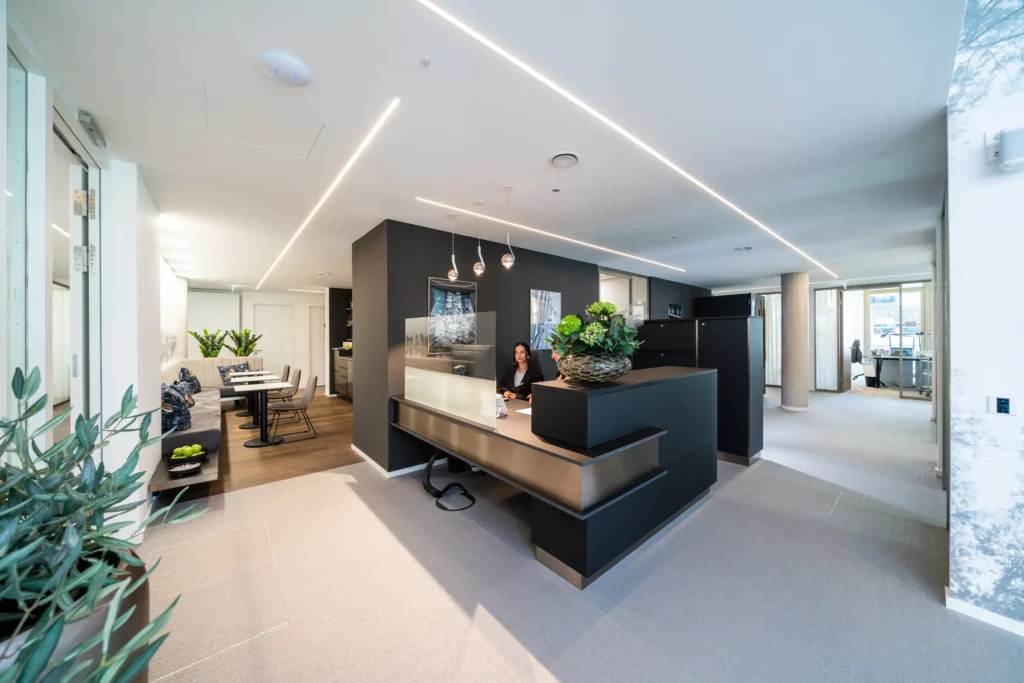
At Satellite Office, coworking isn’t intended to be a noisy open-plan concept. The focus is on a professional environment that combines mobile work with a high-quality atmosphere. For discerning users, this is an important distinction: flexibility doesn’t have to feel improvised.
Who is a serviced office best suited for?
A serviced office is the right choice if you need more than just a workspace. It provides a space for focused work, confidential conversations, client meetings, and a professional corporate image.
A serviced office is particularly well-suited if you:
- need their own office
- Welcoming Customers or Business Partners
- work confidentially
- are looking for a prestigious business address
- work with a team
- want to grow flexibly
- Want to outsource office administration
- Prioritize service, location, and amenities
The key point: A serviced office combines flexibility with reliability. You remain flexible, but you don’t come across as making do with a temporary solution.
Quiet as a Location Advantage: pureSilent® at Satellite Office
Many workplaces promise flexibility. Few offer true peace and quiet.
This is precisely where Satellite Office differs significantly from traditional coworking and standard office concepts. With pureSilent®, Satellite Office has developed a space and work concept focused on concentration, privacy, and acoustic quality. It’s not just about being quieter. It’s about creating an environment where people can think clearly, speak confidentially, and work with confidence.
This is particularly relevant for users who make challenging decisions on a daily basis, handle sensitive information, or welcome customers in a high-end setting. A quiet work environment is not just a matter of comfort; it affects productivity, the quality of conversations, and a company’s image.
In an open coworking space, the level of quiet can vary depending on occupancy, usage, and the time of day. In a serviced office equipped with pureSilent®, quiet is an integral part of the concept—achieved through space planning, materials, acoustics, zoning, and an atmosphere that fosters concentration.
For many companies, that is precisely what makes the difference. They aren’t just looking for flexibility. They are looking for a place that exudes professionalism while also offering the quiet environment needed to work with focus.
The Underestimated Question: How Does Your Office Come Across to Others?
An office is never just a workplace. It also sends a message.
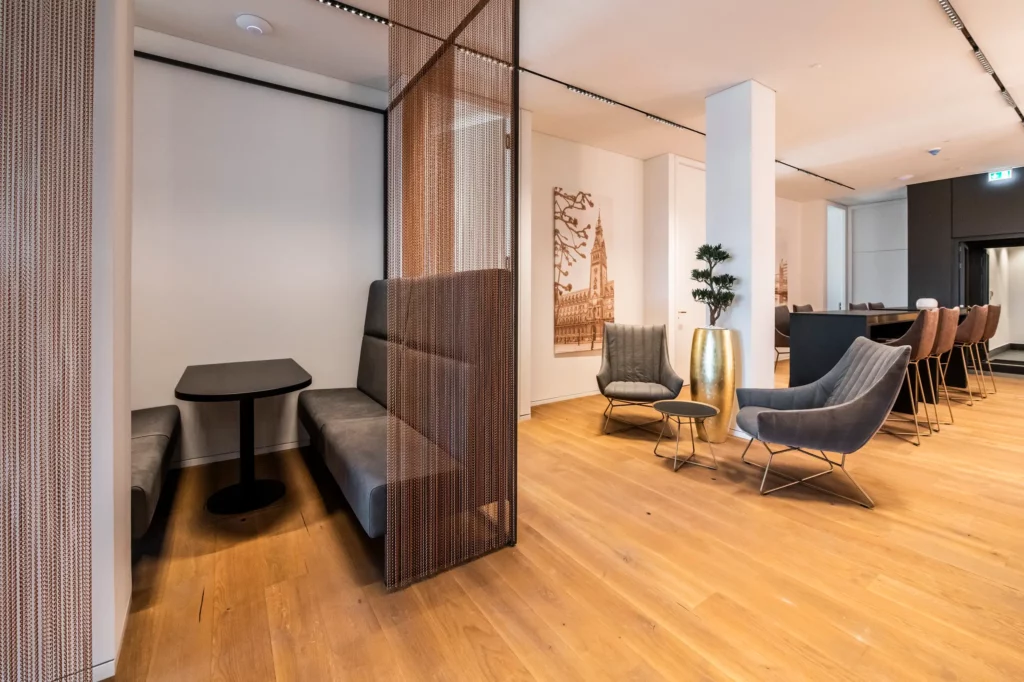
The place where you welcome clients, conduct job interviews, or hold confidential meetings shapes the impression people have of your company. An open coworking space can come across as dynamic, casual, and modern. This is ideal for certain industries and situations.
However, when it comes to client meetings, investor meetings, contract negotiations, or confidential consultations, a different set of standards applies. In those situations, discretion, hospitality, location, the quality of the space, and service become more important than casual encounters at the next table.
A serviced office provides exactly this kind of setting. It gives your company a professional image without forcing you into a long-term traditional lease.
Costs: Which is cheaper?
Coworking is generally more affordable to get started with. You usually pay for access, a workspace, or days of use. This is appealing if you’re rarely on-site or don’t need your own space.
A serviced office costs more, but it also offers significantly more benefits: your own office, privacy, a business address, infrastructure, services, and a prestigious setting. A direct price comparison therefore doesn’t tell the whole story. What matters isn’t just the monthly fee, but the business value it provides.
Don’t just ask, “How much does the job cost?”
You’d be better off asking:
- How often do I use it?
- Do I have to maintain confidentiality?
- Do I see clients?
- What effect should my address have?
- Do I need a TeamOffice?
- How much of the office organization do I want to handle myself?
- How important are calm and concentration?
If you only work occasionally, coworking is often the better option. If you want to maintain a professional image, work with focus, and meet with clients on a regular basis, a serviced office usually offers better value.
Coworking, Serviced Office, or Virtual Office?
Not every business situation fits neatly into a single category. That’s why it’s worth taking a look at related solutions.
Coworking is ideal for flexible work arrangements when you don’t have your own office.
A serviced office is ideal for companies that need a private office with support services and professional infrastructure.
Virtual Office is a good option if you want a prestigious business address but don’t work on-site regularly.
A day office is a good option if you occasionally need a private office for focused work or individual appointments.
Conference rooms are ideal for meetings, workshops, presentations, or confidential discussions in a professional setting.
It is precisely the combination of these options that makes flexible office work so appealing. A company can start with a business address, work on-site on individual days, use conference rooms, and later expand into its own serviced office.
Decision-Making Guide: What’s Right for You?
Coworking is a better fit if you:
- do not require a dedicated space
- Use individual workdays flexibly
- working on the go
- like an open environment
- looking for a simple workplace solution
- do not have regular confidential client meetings
A serviced office is a better fit if you:
- would like to have their own office
- meet with clients on a regular basis
- work confidentially
- Value peace and privacy
- lead a team
- need a prestigious address
- want to combine flexible terms with a professional image
- Prefer a one-stop shop for services and infrastructure

Conclusion: Flexibility is valuable only if it aligns with expectations.
Coworking and serviced offices serve different purposes. Coworking offers easy access to professional workspaces. It’s ideal for remote work, occasional use, and anyone who doesn’t need a permanent office setup.
A serviced office is the better choice when you want to combine flexibility with privacy, tranquility, service, and a professional image. It offers not just space, but structure. Not just amenities, but peace of mind. Not just an address, but a professional presence.
Satellite Office adds one crucial element: pureSilent®. The concept stands for a work environment in which quiet, concentration, and discretion aren’t left to chance, but are deliberately designed. For companies that operate at a high standard and want to project that image, this is often the difference between just any flexible office and the right place.
Stay up to date
Subscribe to our newsletter

Subscribe to our free newsletter and receive regular updates from the world of Satellite Offices. Find out all about exciting events, innovative products, special offers and the latest developments at our locations.