Workplace Quality as a Competitive Advantage in Recruitment


Today, companies that want to attract qualified professionals must offer more than just a competitive salary. Flexible work schedules, opportunities for professional development, and a supportive corporate culture play an important role in an employee’s choice of employer. One factor is often underestimated: the quality of the workplace.
Whether it’s modern office equipment, a quiet work environment, or flexible usage options—the work environment influences how employees perceive their employer. Even during the first job interview, the office space, reception area, and atmosphere convey an impression of how much the company values good working conditions.
This is no longer just about prestigious offices. Modern workplace quality also means enabling different ways of working, reducing the daily workload on employees, and making sensible use of available space. Companies that combine high-quality working conditions with flexible office concepts can not only enhance their appeal as employers but also tailor their office expenses to better meet their needs.
What defines a high-quality workplace?
A modern desk and an ergonomic office chair are essential basics. However, that alone is not enough for a truly high-quality work environment. The key lies in the interplay of interior design, functionality, amenities, location, and service.
It is particularly important to have a work environment that supports a variety of activities. While some tasks require intense concentration, others focus on personal interaction or teamwork. Good office design takes these differences into account and provides spaces suited to each set of requirements.

The importance of such working conditions is highlighted by Gensler’s 2026 Global Workplace Survey. In the international survey of more than 16,400 office workers, about two-thirds reported that they adapt their work environment themselves to compensate for existing shortcomings. Challenges include, among other things, noise, insufficient meeting spaces, and ergonomic issues.
A high-quality workplace is therefore characterized in particular by the following features:
• Quiet and concentration: Well-designed room acoustics and private workspaces reduce avoidable distractions and enable focused work.
• Ergonomics and equipment: High-quality furniture, modern technology, pleasant lighting conditions, and a comfortable indoor climate lay the foundation for comfortable work.
• Flexible space concepts: Different work areas provide space for individual work, one-on-one conversations, teamwork, and hybrid meetings.
• Attractive location: Easy access and a high-quality surrounding area can make the workday more enjoyable.
• Service and organization: Professional support with administrative tasks streamlines processes and reduces the workload on employees.
The key is not to offer as many features as possible. Rather, the work environment should be tailored to the actual needs of the people who use it every day.
How does workplace quality influence recruiting?
First impressions begin before the job interview
Even before the actual job interview begins, applicants form impressions of their potential employer. The reception area, the layout of the premises, and the on-site atmosphere all convey a sense of the company culture.
A professional reception area, well-maintained workspaces, and high-quality meeting rooms can convey a sense of respect and professionalism. Conversely, cramped, cluttered, or poorly equipped workspaces may raise questions about the actual working conditions.
For companies in particular that want to set themselves apart from other employers in the competition for qualified professionals, designing their work environment offers an additional opportunity to stand out.
The first impression should be authentic. A prestigious lobby alone does not make for an attractive workplace. What matters is whether that quality is also reflected in the spaces where employees spend their workdays.
The Work Environment as Part of Employer Branding
Employer branding is often associated with career sites, job postings, and social media campaigns. However, the employer brand isn’t created solely through communication. It becomes tangible, in particular, in the places where people work together every day.
If a company promises autonomy, a focused work environment, and a modern work culture, this should also be reflected in the office design. This includes quiet spaces, functional meeting rooms, and workstations suited to different needs.
A high-quality work environment reflects a company’s values.
It can convey that the employer cares about the well-being and working conditions of its employees.
This makes the company culture more tangible for job applicants. At the same time, it gives employers the opportunity to present their working conditions in concrete terms during the recruiting process, rather than communicating only abstract benefits.
Good Working Conditions as a Competitive Advantage in the Race for Skilled Workers
Not every company can compete with the salaries or brand recognition of large corporations. Attractive working conditions can therefore be an additional advantage, especially for small and medium-sized businesses.
A high-quality office in a central location, professional amenities, and flexible work options provide concrete selling points that can be highlighted in job postings and interviews.
Of course, workplace quality is no substitute for fair compensation, good leadership, or opportunities for professional development. However, it complements these factors and helps convey a well-rounded picture of the employer.
Flexible Work Models: Why a Desk No Longer Needs to Be Permanently Assigned to Every Employee
As hybrid work models become more widespread, the demands placed on office space are also changing. Many employees regularly alternate between working from home and the office. Others work at different company locations from time to time or travel for business.
A modern workplace concept must take these diverse needs into account.
According to the 2025 PwC study “Home & Office – Better Together,” 88 percent of employees surveyed in Germany would like to work from home at least one day a week. Flexible work models have thus long been a key factor in employer attractiveness.
For companies, however, a practical question arises: How can a professional office space be maintained without permanently reserving workstations that remain unused on many days?
Combining Fixed Offices with Flexible Coworking Memberships
One solution is to combine dedicated office space with flexible workspaces.
For example, a company with twelve employees does not necessarily need twelve permanently assigned desks if only six to eight people are regularly working on-site at the same time.
Instead, a dedicated team office for employees who are regularly on-site can be combined with additional coworking memberships for employees with varying on-site schedules.
Employees who primarily work from home can use the flexible workspaces on the days they come into the office. For joint team days, workshops, or larger meetings, suitable conference rooms can be booked as needed.
This way, a permanent, professional company location is maintained, while additional workspace capacity is organized according to actual demand.
At Satellite Office, for example, coworking memberships with different usage allowances are available for this purpose. Depending on the model chosen, workspaces can be used on, say, five or ten days a month, or over a longer period of time.
For employees, this combination offers a clear advantage: They continue to benefit from a high-quality work environment without having to be in the office every weekday.
For employers, this creates greater flexibility in organizing their workspaces without having to forgo a prestigious corporate headquarters or professional office infrastructure.
Working across locations creates additional freedom
Flexibility doesn’t end with the choice between working from home and working at the company headquarters. The option to work at different locations can also be attractive to employees.
A cross-location workplace concept makes particular sense in companies with multiple branches, regionally distributed teams, or regular business travel.
The Satellite Office Membership, for example, allows members to use coworking spaces at locations in Germany, Switzerland, and Italy.
An employee who usually works in Munich can thus also access a professional work environment during a business meeting in Berlin or a stay in Milan.
This facilitates remote work and offers an alternative to makeshift workspaces in hotels or cafés. At the same time, standards regarding amenities, atmosphere, and service are maintained across all locations.
This gives employers the opportunity to offer their employees greater geographical freedom without having to compromise on the quality of a professional office environment.
Less Unused Office Space, Greater Cost-Effectiveness: How Companies Can Save Money
Flexible office concepts offer benefits not only for employees; they can also be economically advantageous.
This is because, in traditional office models, the amount of space leased is often based on the total number of employees. If part of the team regularly works from home, many desks remain unoccupied at times. Yet the ongoing costs for rent, operations, and equipment continue to accrue.
The PwC study “Home & Office – Better Together” illustrates just how great this potential can be: On average, the companies surveyed report office space utilization rates between 51 and 75 percent. Even during peak times, utilization remains below 75 percent for the majority of them.
This shows why it can make sense to align office space planning more closely with actual occupancy.
Maintain only the workspace capacity that is actually needed
By combining fixed offices with flexible memberships, companies can manage their space requirements more effectively.
Instead of permanently assigning each employee their own workstation, the first step is to determine how many permanent workstations are actually needed on a day-to-day basis. Additional capacity can then be provided through time-limited usage quotas.
This can reduce the amount of office space needed on a permanent basis and prevent companies from paying for unused workstations in the long term.
This creates financial flexibility, particularly for companies with hybrid teams or fluctuating staff presence.
Company growth can also be accommodated more flexibly. If additional employees are hired, it is not necessarily required to immediately lease a larger office space. Conversely, changing requirements can be accommodated through appropriate contract models.
High-quality amenities without high upfront investments
Another economic benefit may result from the use of fully equipped serviced offices.
With a traditional office lease, in addition to rent, there are often additional costs for furnishings, technical infrastructure, cleaning, ongoing maintenance, and administrative services.
In a Satellite Office serviced office, key components of the office infrastructure are already in place. Companies receive move-in-ready, furnished offices with internet access, cleaning services, and a personal receptionist. Additional services can be added depending on the chosen contract.
This reduces the effort required to set up the office and the organizational workload involved in running it. At the same time, employees benefit from a professional work environment with high-quality equipment.
The economic benefit, therefore, does not necessarily lie in the lowest rent per square meter, but rather in the more efficient use of high-quality office infrastructure.
Whether costs are actually saved depends on the current space utilization, the membership plans selected, any additional rooms and services booked, and the total contract costs.
A careful assessment of total costs therefore remains crucial. When planned properly, however, flexible office models can achieve two goals at once: a high-quality work environment and budget allocation tailored to actual needs.
Prime locations, high-quality conference rooms, and professional service
In addition to interior design and flexibility, numerous other factors influence how pleasant and efficient the daily office routine can be.
Why the office location is also important for employees
A workplace’s location is more than just a prestigious business address. Among other things, it influences accessibility, opportunities for taking breaks, and the immediate work environment.
Central business locations often offer good access to public transportation as well as restaurants, cafes, shopping, and other services.
For employees, this can make their daily work routine easier and make coming into the office more appealing. However, this is only true if the location also aligns with the team’s actual commutes.
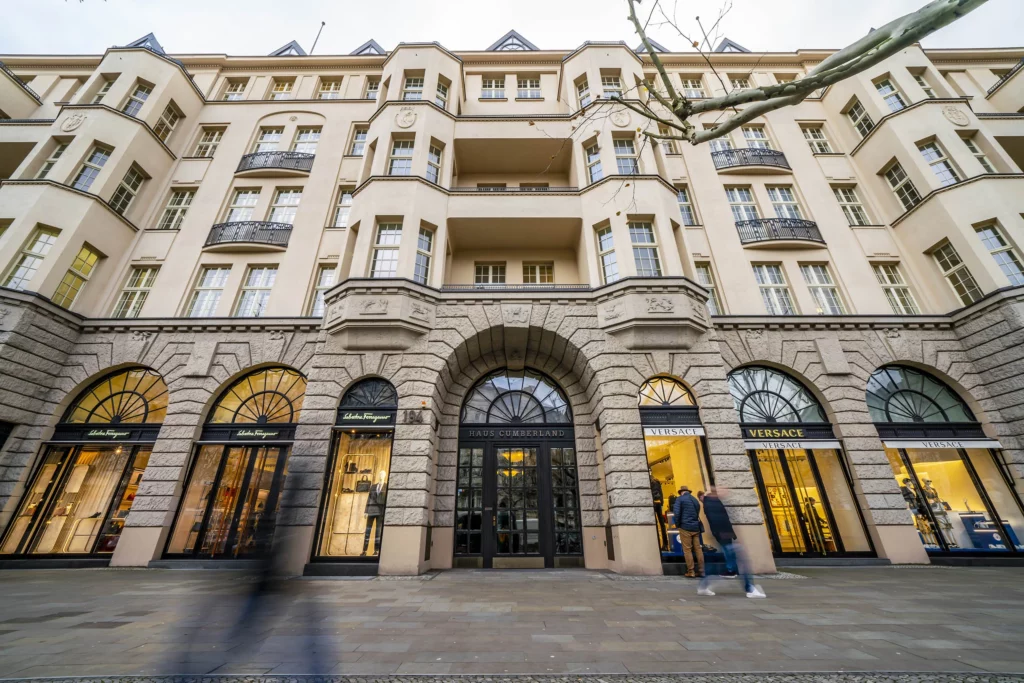
In addition, high-quality buildings and architecturally appealing spaces can contribute to a positive perception of the work environment.
An office in an established business district thus combines practical location advantages with a professional image—both for employees and for job applicants and business partners.
Conference Rooms as Spaces for Collaboration
While focused individual work is often possible from home, in-person interactions at the office take on special significance.
Team meetings, creative workshops, training sessions, and confidential employee discussions require suitable spaces.
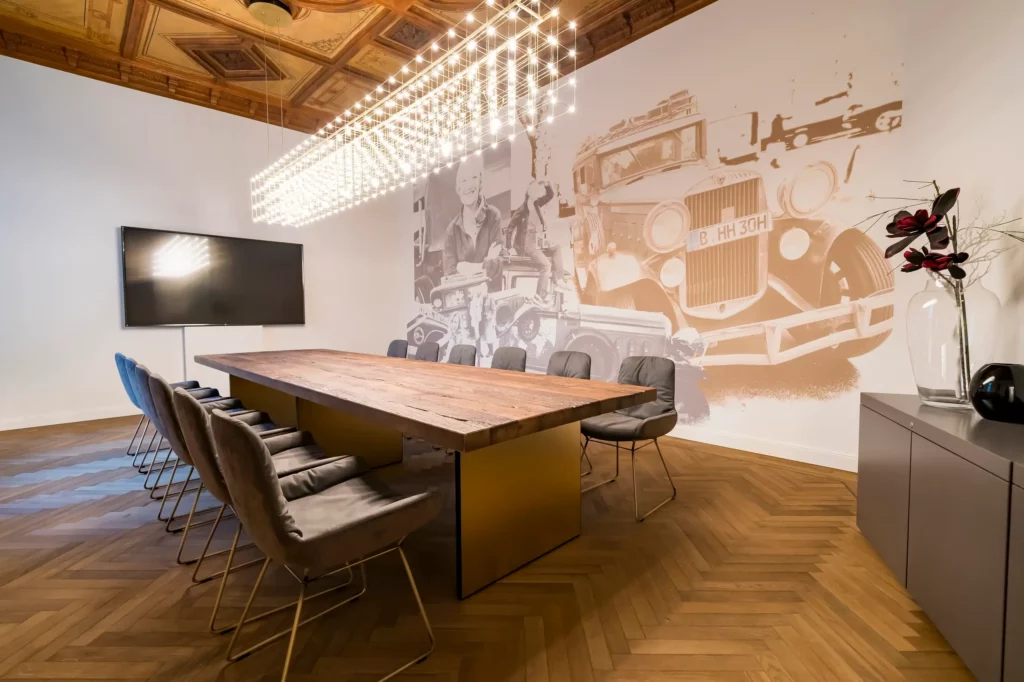
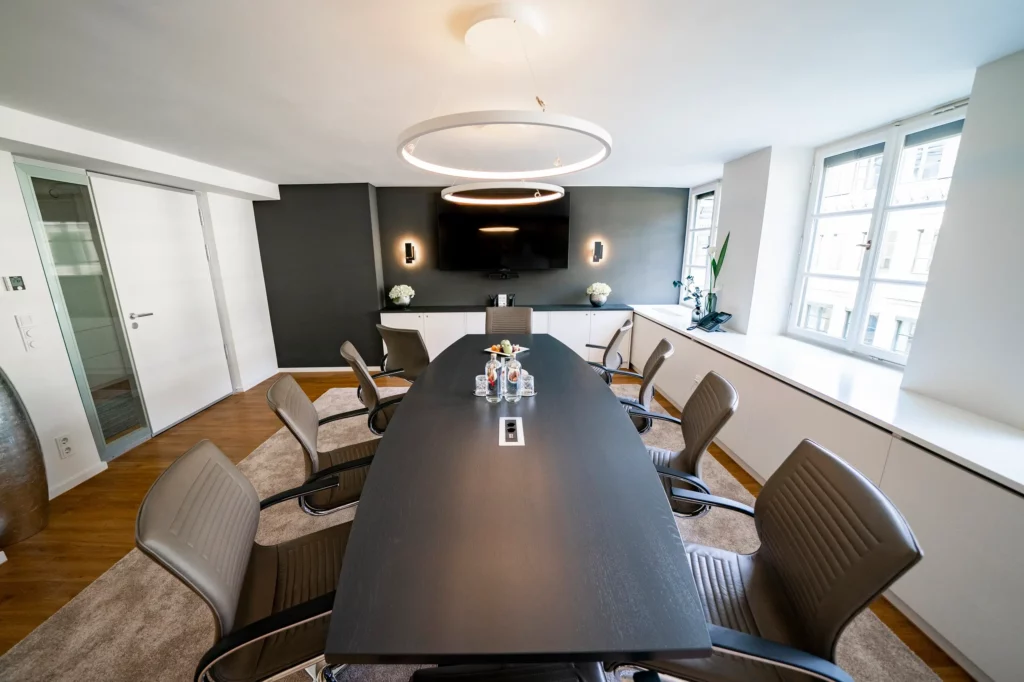
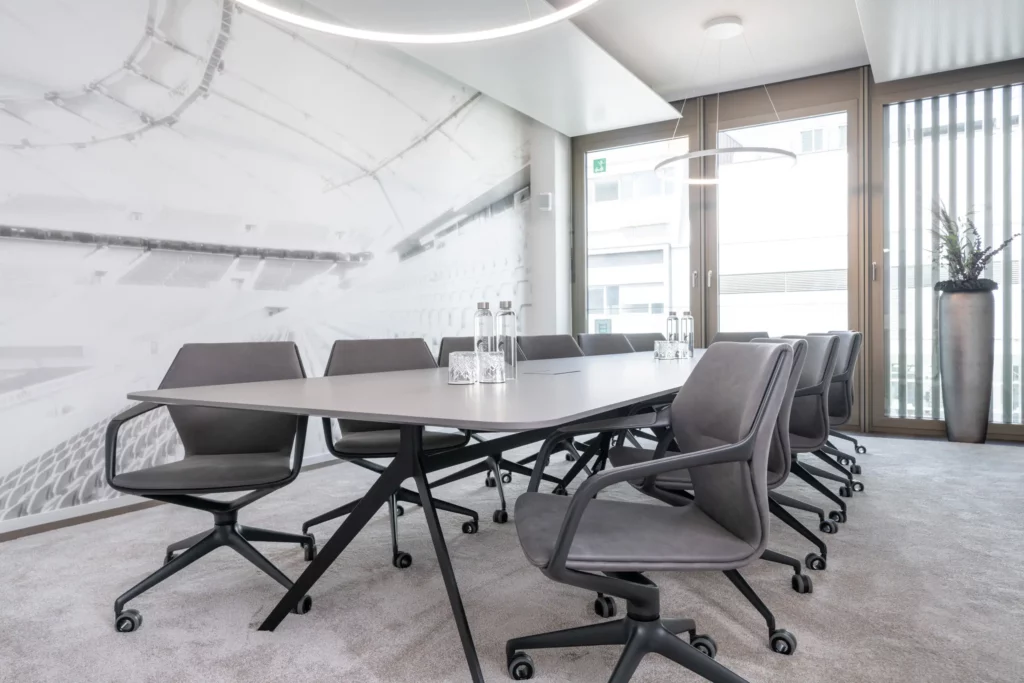
High-quality conference and meeting rooms provide the ideal setting for this. Modern presentation technology, flexible room sizes, and a pleasant atmosphere foster professional interaction.
Such spaces also play a role in recruiting. Job interviews, assessment sessions, and the onboarding of new employees all benefit from a quiet, well-equipped environment.
For companies with flexible office concepts, it’s particularly advantageous that larger meeting rooms don’t have to be permanently reserved. They can be booked as needed—for example, for joint in-person days or workshops.
This allows for a more targeted approach to space requirements in this area as well.
Office services ease the burden on employees in their day-to-day work
Organizational support is an often-underestimated component of workplace quality.
Especially in smaller companies, employees often take on additional tasks that fall outside their actual job description. These include, for example, greeting visitors, answering phone calls, or sorting incoming mail.
A professional office and secretarial service can take over these tasks or assist with them.
Satellite Office offers a range of services, including a personal receptionist, telephone service, mail handling, and other office services.
For companies, this means that not all administrative processes need to be handled by their own staff. Employees can focus more on their core responsibilities, while visitors and business partners are attended to professionally.
A well-organized daily office routine is therefore not just a matter of efficiency, but also an integral part of high-quality working conditions.
Attracting and Retaining Employees Long-Term: Why Workplace Quality Matters in the Long Run
A positive job interview can strengthen interest in a company. However, whether employees remain satisfied in the long term is determined only by their day-to-day work experience.
This is where it becomes clear whether the promised quality of work is actually being delivered.
Constant interruptions, a lack of quiet spaces, or poorly equipped meeting rooms can make the workday more difficult. A functional, comfortable work environment, on the other hand, creates better conditions for focused work and productive collaboration.
The importance of appropriate workspace designs is also highlighted by the 2025 PwC study: While 43 percent of employees surveyed would like to have focus rooms and quiet spaces, only 21 percent of the companies surveyed offer such options.
There is therefore still a significant gap between employees’ expectations and what is actually available.
Companies that regularly reevaluate their work environment and adapt it to changing needs can address this issue.
Flexible work models are also relevant in this context. Companies that allow their employees to choose their work location and level of office presence within clear operational guidelines take into account diverse life and work situations.
Combined with high-quality workspaces, personalized service, and an efficient office organization, this creates a work environment that supports employees in their day-to-day work.
A high-quality workplace alone does not guarantee long-term employee retention. However, it is a visible component of a corporate culture that prioritizes good working conditions and appreciation.
How Companies Can Specifically Improve Workplace Quality
Before companies invest in new office space or redesign existing workspaces, they should first analyze the actual needs of their employees.
The following questions can help with this assessment:
1. How are our workspaces actually being used? How many employees are regularly in the office at the same time, and what is the occupancy rate on particularly busy days?
2. Does our work environment provide enough quiet? Are there designated areas for focused work, video conferences, and confidential conversations?
3. Does our space layout support hybrid work models? Can dedicated offices and flexible workstations be effectively combined?
4. Is our office easily accessible to employees? Do transportation links, location, and infrastructure align with the team’s needs?
5. Do our spaces support collaboration? Are there suitable conference rooms available for team meetings, workshops, and face-to-face interactions?
6. Which tasks could we streamline from an organizational standpoint? Can office and secretarial services reduce the workload on employees and improve internal processes?
7. Does the quality of our office space align with our employer brand? Do our workspaces truly reflect the corporate culture we aim to showcase in our recruiting efforts?
The answers provide a foundation for specifically improving both working conditions and the efficient use of office space.
Flexibly Designing High-Quality Work Environments with Satellite Offices
Companies that want to enhance their employer appeal through the quality of their work environment do not necessarily need large in-house office spaces or long-term investments in a complete office infrastructure.
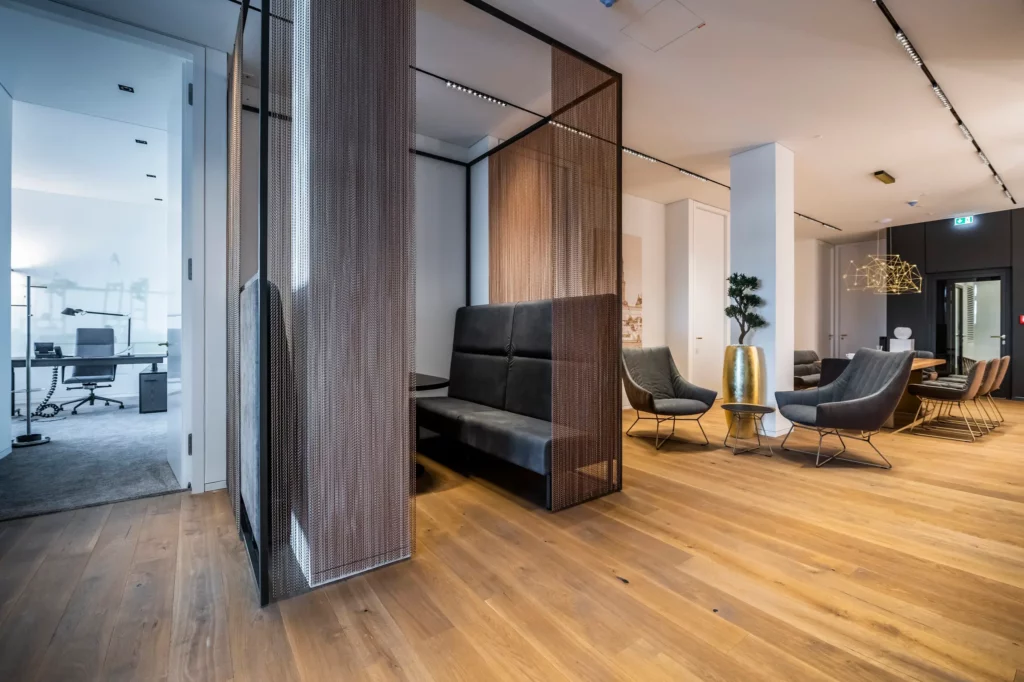
Satellite Office combines high-quality, move-in-ready offices in central business districts with flexible usage options, professional services, and well-thought-out interior design.
The focus is on the proprietary pureSilent® space concept. It takes into account the interplay of architecture, acoustics, lighting, materials, and spatial layout to create a work environment that fosters concentration, privacy, and personal interactions.
Companies can combine dedicated individual and team offices with coworking memberships, allowing them to organize hybrid work models tailored to their needs. The ability to use spaces across multiple locations provides additional flexibility for employees who regularly work in different cities.
In addition, high-quality meeting rooms, personalized reception services, and office support services are available.
This creates a work environment that is not based solely on the number of employees, but on the company’s actual needs.
The goal: to combine a high-quality workspace, flexible use, and economically sound space planning.

Conclusion: Workplace quality is an investment in employer attractiveness and cost-effectiveness
Anyone who wants to make a strong impression in recruiting should view the workplace as an integral part of their employer strategy. After all, the work environment not only shapes applicants’ first impressions but also influences the conditions under which employees work together on a daily basis.
High-quality furniture and prestigious office spaces are no longer the only deciding factors. What’s in demand are workspaces that facilitate concentration, support flexible work models, and ease the burden on employees through a professional infrastructure.
By combining dedicated offices with flexible workspaces, companies can also make better use of their space and avoid unnecessary costs.
The future of successful office design therefore does not lie in providing as much space as possible. Rather, it lies in creating exactly the work environment that companies and employees actually need—without compromising on quality.
Work environments that combine quality and flexibility
Discover Satellite Office’s high-quality offices in prime business locations—featuring flexible usage options, the pureSilent® space concept, and personalized service.
Discover office solutions from Satellite Office
Sources
Stay up to date
Subscribe to our newsletter

Subscribe to our free newsletter and receive regular updates from the world of Satellite Offices. Find out all about exciting events, innovative products, special offers and the latest developments at our locations.